
Finding quality research peptides for sale requires the same careful vetting you’d apply to any major investment, starting with supplier credentials, third-party testing, and transparent sourcing practices. The Kylo Peptides catalog exemplifies this standard, but understanding what separates legitimate suppliers from questionable ones protects both your budget and research outcomes.
This verification challenge mirrors what solar energy buyers face every day. Both markets share a common problem: rapid growth has attracted suppliers of wildly varying quality, and the wrong choice costs you time, money, and results. Just as a peptide researcher needs certificates of analysis and purity guarantees, solar shoppers need verified installer credentials, equipment warranties, and performance data before signing contracts.
The parallel runs deeper than you might expect. Research peptide buyers learn to spot red flags like missing batch testing, vague product descriptions, and suppliers who can’t provide documentation. Solar customers benefit from applying that same scrutiny to installer licenses, equipment specifications, and financing terms. Both purchases demand evidence, not promises.
What makes peptide verification particularly instructive is the straightforward checklist approach: third-party lab results, batch-specific documentation, proper storage protocols, and responsive customer support. These aren’t negotiable extras. They’re baseline requirements that separate professional suppliers from fly-by-night operations.
Your solar investment deserves the same rigor. Before you commit to panels, inverters, or installation contracts, you’ll want the solar equivalent of those certificates of analysis. That means verified installer credentials, manufacturer warranties in writing, detailed system performance projections, and financing terms you can actually compare. The research-driven approach that protects peptide buyers works just as well for solar shoppers navigating a crowded, sometimes confusing marketplace.
The Research-First Mindset: Why It Matters for Solar Energy
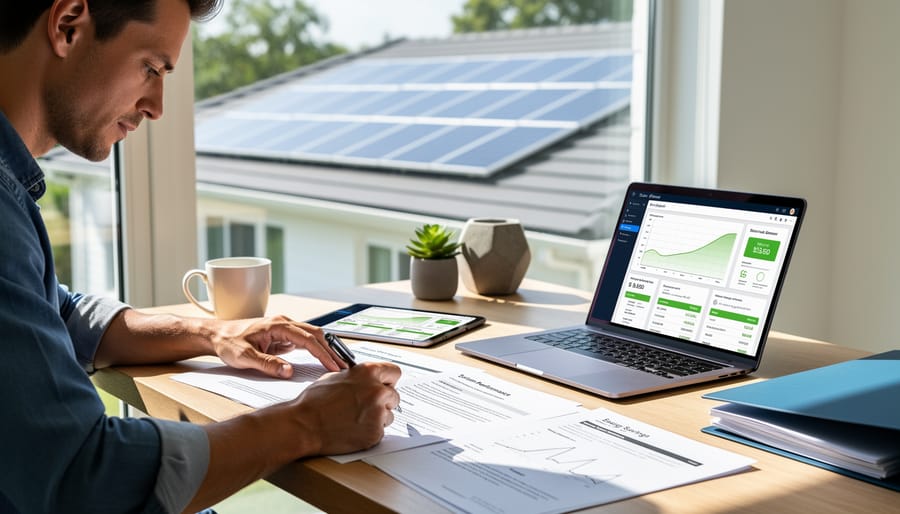
When you’re shopping for any specialized product, whether it’s peptides for research or solar panels for your home, the same fundamental truth applies: unverified claims cost money, and sometimes a lot more than that. A research-first approach to solar energy isn’t about being skeptical for skepticism’s sake. It’s about protecting yourself from the aggressive marketing, inflated promises, and occasionally outright misleading information that flood the solar market.
The solar industry has grown rapidly, which means it’s attracted both exceptional companies and opportunistic ones. Some installers make performance claims that sound impressive but crumble under scrutiny. Others offer “limited-time deals” designed to pressure you into signing before you’ve had time to verify their credentials or compare alternatives. A homeowner who accepts these claims at face value might end up with subpar equipment, an installation that doesn’t meet code, or financing terms that erase most of the promised savings.
Approaching solar with a research mindset means treating certifications as starting points, not endpoints. A company might display industry badges on their website, but have those certifications been independently verified? Are they current? What do third-party reviews and actual customer experiences reveal beyond the curated testimonials on their homepage?
The stakes here matter. Solar installations represent a significant financial commitment, often $15,000 to $30,000 or more. The difference between a well-researched decision and an impulsive one can mean thousands of dollars in long-term value, decades of reliable energy production versus chronic maintenance headaches, and genuine savings versus buyer’s remorse. Taking the time to verify claims, understand what certifications actually guarantee, and distinguish quality providers from questionable ones isn’t overthinking, it’s the foundation of a sound investment.
What to Verify Before Investing in Solar Panels
Manufacturer Credentials That Actually Matter
When you’re evaluating solar panels, three certifications separate proven performers from rebranded commodities. The IEC PV certification standards define global benchmarks for safety and performance, specifically IEC 61215 for crystalline silicon panels and IEC 61730 for electrical safety. Panels carrying these marks have survived rigorous testing for thermal cycling, humidity exposure, and mechanical stress that simulates decades of rooftop conditions.
UL certification matters for North American installations because it verifies fire safety and electrical code compliance. You’ll see UL 1703 on most quality residential panels, confirming they won’t become fire hazards during extreme weather or electrical faults.
The third credential worth checking is the manufacturer’s tier rating from Bloomberg New Energy Finance. Tier 1 status means the company has supplied projects financed by major banks, owns its manufacturing facilities, and invests in research and development. It’s not a quality guarantee, but it indicates financial stability, important when you’re relying on a 25-year warranty.
Marketing buzzwords like “certified green” or “industry leader” mean nothing without these specific standards backing them up. Some manufacturers plaster their websites with obscure regional certifications or internal quality awards that look impressive but offer zero independent verification. Stick to the three certifications above, and you’ve filtered out most questionable products before wasting time on sales calls.
Installer Qualifications You Shouldn’t Skip
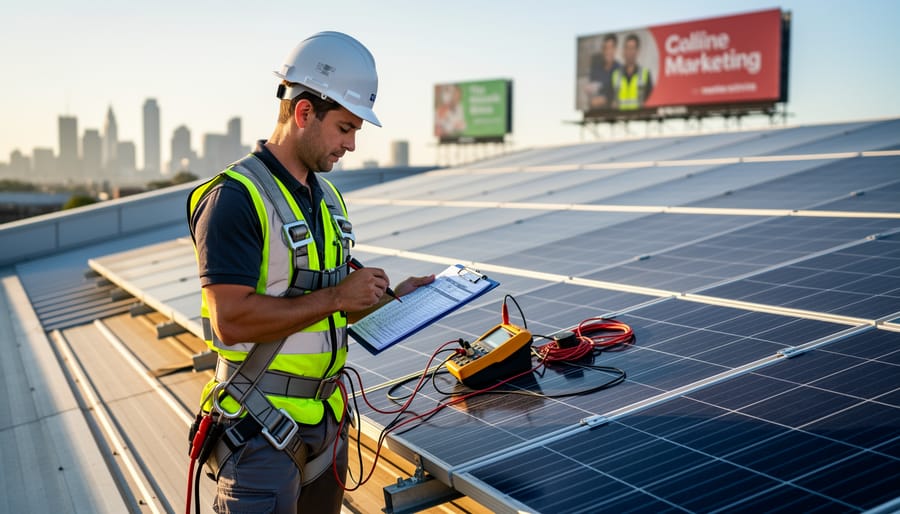
Before handing over a deposit, you need proof that your installer won’t disappear mid-project or leave you with a system that fails inspection. Start with state-level licensing. Most states require specific solar contractor licenses, not just general electrical permits. Ask for the license number and verify it’s current through your state’s licensing board website. An active license means they’ve met minimum competency standards and carry accountability.
Insurance matters more than most homeowners realize. Request certificates for both general liability and workers’ compensation coverage. General liability protects your property if something goes wrong during installation. Workers’ comp ensures you’re not liable if someone gets injured on your roof. Reputable installers carry at least $1 million in general liability. If they hesitate to provide proof, walk away.
Experience translates to fewer mistakes and faster troubleshooting. Ask how many installations they’ve completed in your area, local experience means they understand permitting quirks and utility interconnection processes. Request references from jobs completed in the past year, not five years ago. Check their track record with the Better Business Bureau and online reviews, paying attention to how they handle complaints.
Finally, verify their certifications from equipment manufacturers. Installers certified by major panel and inverter brands receive better training and can offer stronger warranties. Some manufacturers void warranties if installation wasn’t performed by a certified professional. Don’t assume certification, ask to see current credentials before you sign anything.
Comparing Your Solar Options: A Data-Driven Approach
Just as verifying supplier reliability helps you choose the right research products, running the numbers on solar options ensures you make a decision that fits your financial reality. The market offers three primary paths when you make the shift to solar and each carries different implications for your wallet and your home equity.
The full purchase route means paying the entire system cost upfront, typically between $15,000 and $30,000 for most residential installations. You own the equipment immediately, which entitles you to the full federal Investment Tax Credit (currently 30% of system cost) plus any state incentives. There’s no interest eating into your long-term savings, and property value increases go straight to your bottom line. This works well for homeowners with available capital who plan to stay put for at least seven to ten years.
Solar loans spread that same purchase across 10 to 25 years with monthly payments. You still own the system and claim all tax benefits, but you’ll pay interest that ranges from 3% to 8% depending on creditworthiness and loan terms. The trade-off becomes clear in a straightforward cost comparison: your electricity savings should exceed your loan payment from day one, creating immediate positive cash flow even while financing the system.
| Payment Method | Upfront Cost | Monthly Payment | Ownership & Tax Benefits | Best For |
|---|---|---|---|---|
| Full Purchase | $15,000-$30,000 | $0 | Immediate ownership, full tax credits | Available capital, long-term homeowners |
| Solar Loan | $0-$2,000 | $100-$250 | Immediate ownership, full tax credits | Homeowners wanting ownership without large upfront cost |
| Lease/PPA | $0 | $80-$200 | No ownership, no tax benefits | Lower bills with zero responsibility |
Leasing or entering a power purchase agreement (PPA) eliminates upfront costs entirely. You pay the leasing company a fixed monthly fee or a per-kilowatt-hour rate for the electricity the panels generate. The company owns the equipment, handles maintenance, and claims the tax credits. Your costs stay predictable and typically run 10% to 20% below utility rates, but you forfeit the tax benefits and the system adds nothing to your property value. This path suits homeowners who want lower bills without the responsibilities of ownership or who don’t have the tax liability to use credits effectively.
The numbers tell the story over 25 years. A purchased system typically delivers $25,000 to $40,000 in net savings after recouping initial costs. A financed system nets $18,000 to $32,000 after interest. A lease might save $8,000 to $15,000 total, because you’re essentially renting someone else’s equipment at a discount to utility rates.
Match your choice to your situation. If you have equity or savings and plan to stay in your home, purchasing maximizes returns. If cash flow matters more than total savings, a loan delivers ownership benefits with manageable payments. If you want simplicity and guaranteed lower bills without thinking about equipment, leasing trades long-term wealth building for short-term convenience. Run the actual numbers with quotes from multiple providers, because regional incentives and your specific energy usage shift these calculations significantly.
Real Results from Homeowners Who Did Their Research
When Sarah Martinez started researching solar options for her Livermore home in 2025, she spent three months comparing installers. “I treated it like buying a car, checked credentials, read reviews, asked for references,” she says. Her diligence uncovered that two companies she’d initially considered had expired NABCEP certifications. She ultimately chose a provider with current certifications, comprehensive warranties, and transparent pricing. Two years in, her system has exceeded projected output by 12%, saving her an average of $185 monthly. “That research time paid for itself in the first six months,” she notes.
Business owner Marcus Chen took a similar approach when evaluating solar for his commercial property. He requested performance data from installers’ previous projects and verified manufacturer warranties independently. “One company promised 25-year coverage but couldn’t show me the actual warranty document,” he recalls. The installer he selected provided detailed documentation and explained how panels work in his specific climate conditions. His system now covers 80% of his facility’s energy needs, and he’s documented $3,200 in savings over 18 months.
The Patel family’s research focused on financing structures. They compared loan terms from four providers, calculating total costs over 20 years rather than focusing solely on monthly payments. “We discovered one ‘zero-down’ option would have cost us $18,000 more over the loan term,” Priya Patel explains. Their chosen financing saved them money while maintaining full ownership and tax credit eligibility. “We spent two weekends running numbers, but we’ll benefit from that work for decades,” she adds. Their system has required zero maintenance calls since installation.
Questions to Ask Before Signing Any Solar Agreement
Before you commit to any solar agreement, arm yourself with questions that cut through sales pitches and reveal what you’re actually getting. The right questions expose potential red flags early and help you compare providers on equal footing.
Start with equipment specifics. Ask which exact panel models they’re proposing and request the manufacturer’s spec sheets showing efficiency ratings, degradation rates, and temperature coefficients. Don’t accept vague answers like “premium panels”, you need model numbers and documented performance data. Similarly, ask about the inverter brand and type (string, micro, or hybrid), as this component heavily influences your system’s reliability and monitoring capabilities.
Installation timeline questions matter more than many realize. Pin down the actual start date, estimated completion time, and what happens if weather or permitting delays the project. Ask who handles permit applications and utility interconnection paperwork. A quality installer manages these administrative headaches for you, while less experienced companies might leave you navigating bureaucracy alone.
Warranty coverage deserves its own conversation. Request written clarification on three separate warranties: the panel manufacturer’s performance guarantee (typically 25 years), the inverter warranty (often 10-12 years), and the installer’s workmanship warranty covering the actual installation. Ask specifically what each warranty covers, what voids it, and who you contact for claims. Some companies disappear after installation, leaving you with manufacturer warranties but no local support.
What should I know about long-term performance guarantees?
Reputable agreements specify minimum energy production levels and explain remedies if your system underperforms. Get this in writing, not just verbal promises.
Who’s responsible for maintenance and monitoring?
Clarify whether the agreement includes performance monitoring software, how you’ll access production data, and who handles panel cleaning or repairs. Some contracts include monitoring; others charge separately.
Can I cancel the contract, and what are the terms?
Most states mandate a cooling-off period (usually 3-7 days) for contract cancellation. Ask about this window and any cancellation fees that might apply.
Performance monitoring separates hands-off systems from those requiring constant attention. Ask whether monitoring software comes standard, how you’ll receive alerts about system issues, and what response time the installer guarantees for repairs. The best providers offer real-time monitoring apps and proactive maintenance rather than waiting for you to notice problems.
Finally, address the financial fine print. Request a detailed breakdown showing equipment costs, installation labor, permitting fees, and any financing charges separately. Ask about available rebates or incentives and who claims them. If you’re considering a loan or lease, get the total cost over the agreement’s lifetime in writing, including interest rates and any balloon payments.
Making the switch to solar isn’t just about jumping on a trend. It’s about protecting a substantial investment in your home or business. The same caution you’d apply when vetting any product requiring quality assurance applies here too.
You wouldn’t accept vague promises or skip verification steps when buying something that affects your health or your bottom line. Solar panels deserve that same level of scrutiny. Check those certifications. Ask pointed questions about warranties and performance guarantees. Verify installer credentials. Review the maintenance checklist before you commit.
The good news? You now have the framework to evaluate solar providers with confidence. You know which questions separate legitimate companies from questionable ones. You understand what documentation matters and which marketing claims are just noise.
Solar technology has matured into a reliable, cost-effective energy solution. When you approach it with a research-first mindset, you’re not just making a purchase, you’re securing decades of energy independence and savings. Trust the process, verify everything, and move forward knowing you’ve made an informed choice.